Archives
- 2026-08
- 2026-07
- 2026-06
- 2026-05
- 2026-04
- 2026-03
- 2026-02
- 2026-01
- 2025-12
- 2025-11
- 2025-10
- 2025-09
- 2025-03
- 2025-02
- 2025-01
- 2024-12
- 2024-11
- 2024-10
- 2024-09
- 2024-08
- 2024-07
- 2024-06
- 2024-05
- 2024-04
- 2024-03
- 2024-02
- 2024-01
- 2023-12
- 2023-11
- 2023-10
- 2023-09
- 2023-08
- 2023-07
- 2023-06
- 2023-05
- 2023-04
- 2023-03
- 2023-02
- 2023-01
- 2022-12
- 2022-11
- 2022-10
- 2022-09
- 2022-08
- 2022-07
- 2022-06
- 2022-05
- 2022-04
- 2022-03
- 2022-02
- 2022-01
-
Another TKI used in cancer therapy
2022-01-28
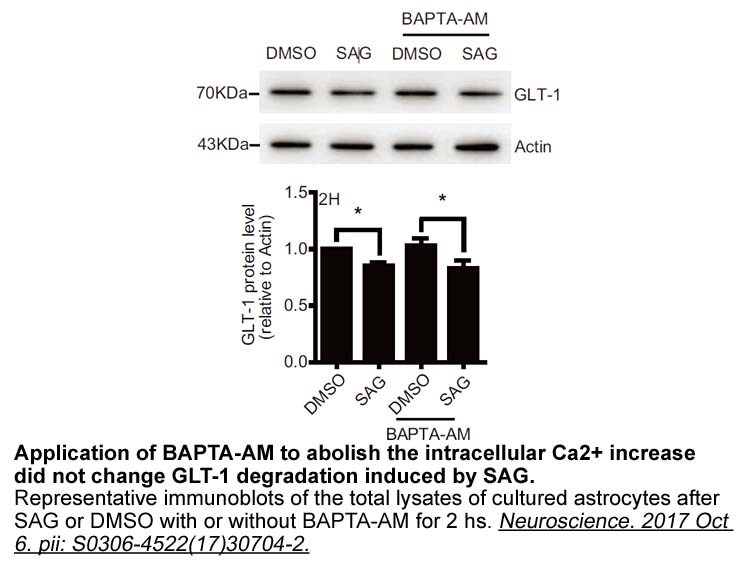
Another TKI used in cancer therapy is the Abl inhibitor imatinib mesilate which has also a beneficial effect on glucose homeostasis in diabetic humans [39], [40], [41]. Imatinib has a clear impact on NFκB activation and anti-apoptotic preconditioning of β-cells [39], attenuating islet inflammation [
-
ADAM has two alternative splicing forms a membrane
2022-01-28
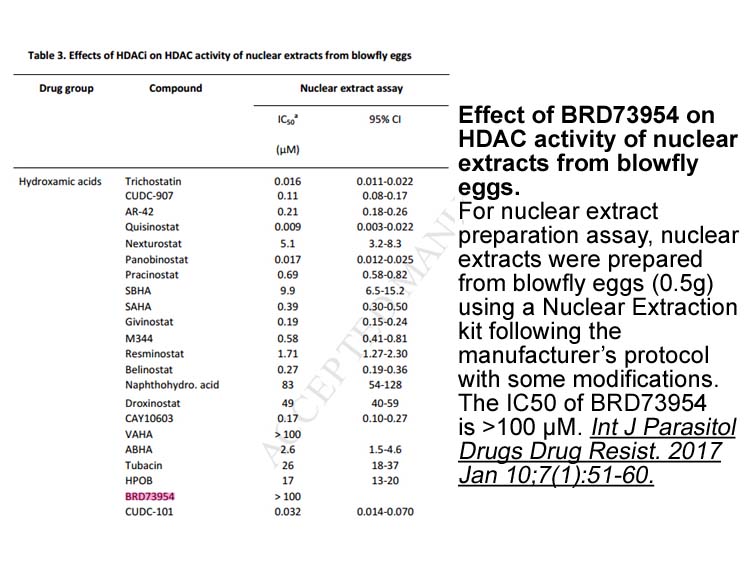
ADAM12 has two alternative splicing forms, a membrane-anchored long form (ADAM12-L) and a secreted short form (ADAM12-S). Both the long and short forms have metalloproteinase, disintegrin, cysteine-rich, and epidermal growth factor-like domains and can shed pro-heparin binding-epidermal growth facto
-
Structurally HMTs can be broadly categorized into three func
2022-01-28
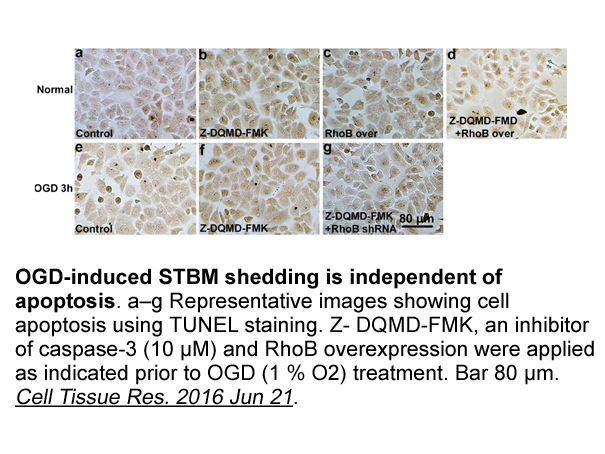
Structurally, HMTs can be broadly categorized into three functional enzymatic families, the SET (Suppressor of variegation, Enhancer of zeste, Trithorax)-domain- containing methyltransferases, the non-SET DOT1-like (DOT1L) lysine methyltransferases, the PRDM family, containing a PR (PRDI-BF1-RIZ1 ho
-
In hypoxic breast cancer cells BNIP mediated autophagy activ
2022-01-28
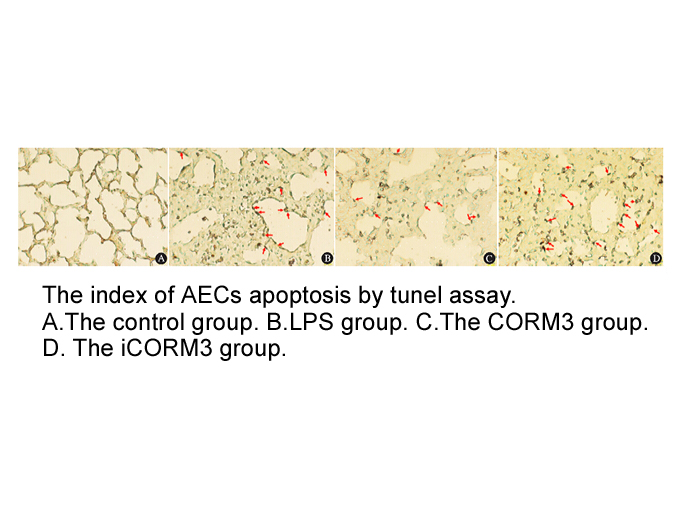
In hypoxic breast cancer cells, BNIP3-mediated autophagy activation and elevation of amino Epibrassinolide levels were notable. BNIP3, a BCL-2 family protein, is known to be transcriptionally regulated by HIF-1α and to be involved in cancer cell death in hypoxic conditions [51]. As a link to autoph
-
It is important to note that upon
2022-01-28
It is important to note that upon RIG-I activation, IRF-3, p38, and ERK were activated by 3p-siHBx, leading to upregulated IFN response (Fig. 6). This suggests that 3p-siHBx has specific effects on HBV replication. In addition, 3p-siHBx induced type III IFN response (Fig. 6D), which could also inhib
-
Stimulation of GC A by CNP was further corroborated by
2022-01-28
Stimulation of GC-A by CNP was further corroborated by using a cGMP enzyme immunoassay. We could show that CNP significantly stimulated cGMP synthesis in the GC-A reporter cell line. CNP stimulation resulted in similar maximal cGMP levels compared to stimulation by ANP and BNP. Therefore, by lumines
-
SCH 527123 A number of synthetic GPR
2022-01-28
A number of synthetic GPR119 agonists have been reported to date, several of which have advanced into clinical trials. Reported GPR119 agonists are often composed of three parts as depicted in : a piperidine or a piperazine ring -substituted with a carbamate or a heteroaryl group at the right side,
-
br Acknowledgments This work was supported by a grant CIHR
2022-01-28
Acknowledgments This work was supported by a grant CIHR-NSFC China-Canada Joint Health Research from the National Science Foundation of China (Grant Number 81061120525) and the Canadian Institutes for Health Research (Grant number CCI-109605). The authors thank two anonymous reviewers for helpful
-
After the origin of the
2022-01-27
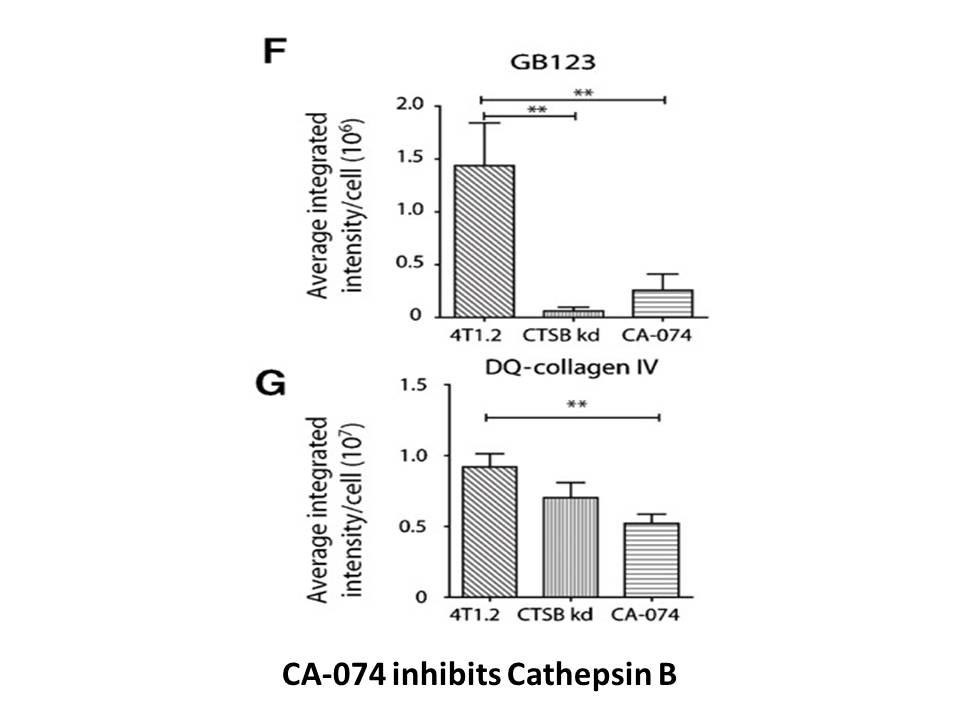
After the origin of the family of genes for receptors for peptides similar to glucagon, the genes have not remained static. Not only have their sequences evolved, but also like peptides similar to glucagon (Irwin, 2001, Irwin, 2009, Irwin, 2012, Ng et al., 2010, Hwang et al., 2013), the numbers of g
-
br Conflicts of interest br
2022-01-27
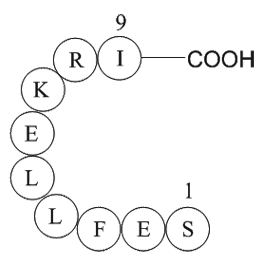
Conflicts of interest Funding This work was supported by the Higher Education Commission Pakistan start-up research grant to Anjum Riaz. Introduction Distraction osteogenesis (DO) is an endogenous tissue engineering technology used to repair skeletal including craniofacial deformities, in
-
A phase I clinical trial has been
2022-01-27
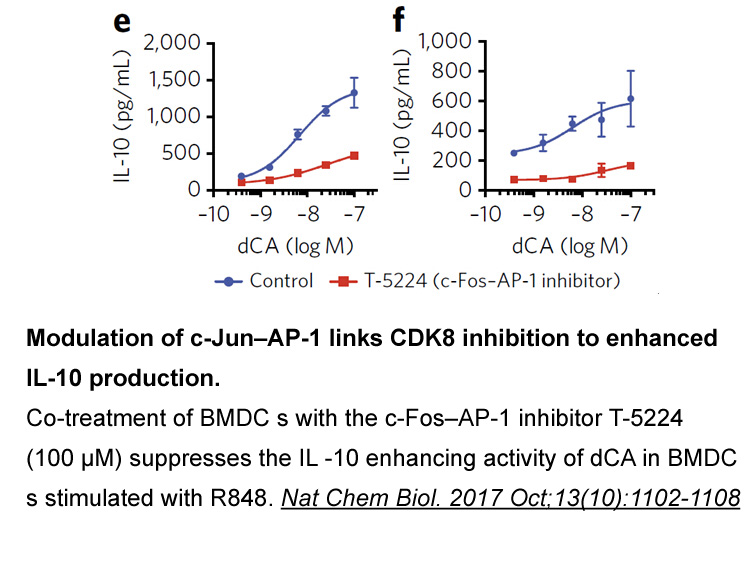
A phase I clinical trial has been completed for assessing CEP-26401 in cognitive impairment in healthy individuals without disclosing any results (NCT01903824). Although CEP-26401 is under clinical trial study, several projects are in progress for synthesizing novel irdabisant analogs in order to im
-
Biological evaluations of the compounds
2022-01-27
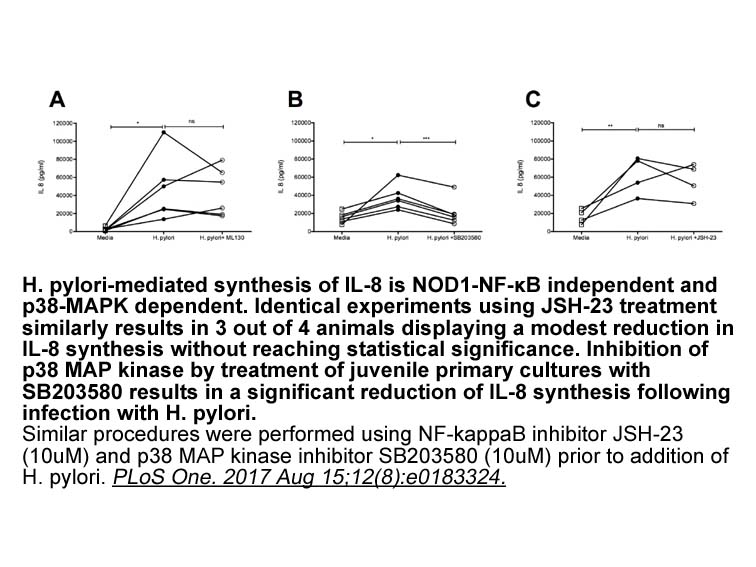
Biological evaluations of the compounds were done both using HCV protease and replicon assays. Results are shown in . The protease inhibitory IC’s were determined using a FRET assay with HCV NS3/4A 1a protease domain. The replicon EC’s were determined using a replicon luciferase cell-based assay. Th
-
Interestingly myorelaxation and the stimulation of cGMP
2022-01-27
Interestingly, myorelaxation and the stimulation of cGMP production are properties also reported for sGC stimulators, such as YC-1 and BAY 41–2272 (i.e., indazole compounds that were discovered in the 1990s) [35]. They relax aortic ring contractions induced by phenylephrine, and their effects are si
-
hyPerFUsion™ high-fidelity DNA polymerase The average pregna
2022-01-27
The average pregnancy rate in this work was 60.1%; similar results have been reported with the same estrus synchronization treatment (58% pregnancy rate) [26]. Later studies also showed that the pregnancy rate was 56.9 and 51.1%, with FTAI and estrous detection, respectively [34,35]. Although that
-
Previously localization studies have been conducted using an
2022-01-27
Previously, localization studies have been conducted using antibody-based detection of Pgp protein in tissues of Clade V nematodes. In transgenic C. elegans, Cel-Pgp-3 and Cel-Pgp-1 proteins localized to the apical membranes of the excretory and intestinal cells and the anterior pharynx (Broeks et a
8607 records 557/574 page Previous Next First page 上5页 556557558559560 下5页 Last page